Focus
Brown noise for focus: does it really quiet your brain?
Does brown noise for focus work? What the ADHD trials show, why brown noise itself has never been tested, and how loud is safe at your desk.

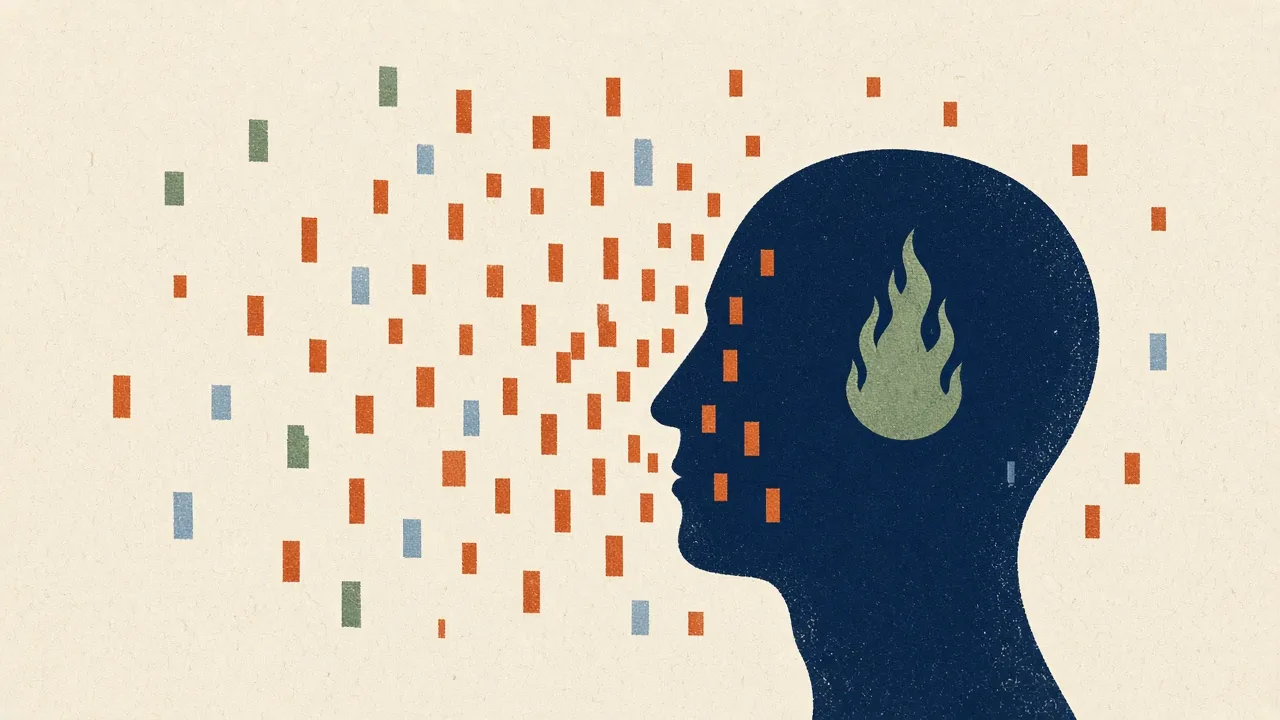
Search "brown noise" on TikTok or YouTube and you'll find hour-long loops of a deep, rumbling roar, usually with comments like "my brain finally shut up." Plenty of people with ADHD swear by it.
Here's the awkward part. When researchers pooled the best trials on noise and ADHD in 2024, they went looking for studies of brown noise. They found none. The trials tested white and pink noise.
So brown noise for focus is popular, cheap and probably harmless, but it isn't proven. The research that does exist is still worth knowing, because it tells you who's likely to benefit and who isn't.
What are white, pink, and brown noise?
They're different shapes of the same thing: random sound spread across the frequencies you can hear, roughly 20 Hz to 20,000 Hz.
White noise has equal energy at every frequency. Our ears are most sensitive to higher pitches, so it sounds like a hiss. Think TV static. Plenty of people find it grating within minutes.
Pink noise tilts toward the bass. Energy falls by 3 decibels per octave, and the result sounds like steady rain or wind in trees.
Brown noise tilts further, dropping 6 decibels per octave. It sounds like a distant waterfall, heavy surf or the hum inside an airplane cabin. The name has nothing to do with color. It comes from Brownian motion, named after the botanist Robert Brown.
The researchers behind the 2024 meta-analysis describe it the same way: pink or brown noise has more power in the lower frequencies, and may sound like rain or a waterfall, while white noise sounds like static.
Why does brown noise feel so different?
Mostly because it's easier to live with. A hiss at head height gets tiring. A low rumble fades into the background.
It also covers the sounds that wreck concentration in ordinary rooms: a fridge cycling on, a neighbor's footsteps, a truck outside, a coworker's phone call. Those are sudden, uneven sounds. A steady wall of sound makes them less jarring, and that alone can protect your train of thought.
Expectation probably plays a part too. If a video promises your brain will go quiet in a minute, you put on headphones, sit still and breathe. That helps no matter what's playing. It doesn't make the effect fake. It just means you can't tell, from how you feel, how much is the noise and how much is the pause.
Does brown noise help you focus? What stochastic resonance has to do with it
The main scientific idea behind noise for ADHD is called the Moderate Brain Arousal model, developed by Göran Söderlund and colleagues. It borrows a concept from physics: stochastic resonance. In some systems, a little random noise helps a weak signal cross the threshold it needs to register.
The model proposes that brains with ADHD run a bit under-aroused, so extra sound from outside gives weak signals a boost. In a typical brain, the same noise tips things from helpful into cluttered. Plot it and you get an inverted U: too little stimulation is bad, a moderate amount is best, too much is bad again.
It's a theory, and a contested one. But some data fit it. A 2007 study in the Journal of Child Psychology and Psychiatry tested memory in children with ADHD and without, with and without white noise. The noise helped the children with ADHD and hurt the others.
What did the 2024 meta-analysis find?
A team led by Joel Nigg at Oregon Health & Science University pooled randomized trials in the Journal of the American Academy of Child & Adolescent Psychiatry. Here's what the abstract reports:
- In children and college-age adults with ADHD or elevated ADHD symptoms (13 studies, 335 people), white and pink noise gave a small but statistically significant benefit on laboratory attention tasks (g = 0.249).
- In comparison groups without ADHD (11 studies), white and pink noise had a small negative effect (g = -0.212).
Heterogeneity was minimal and the team found no sign of publication bias. The authors call it a possible low-cost, low-risk option, and say more studies are needed to confirm the effect and to work out safe volume levels.
Two cautions. These were lab tasks, not a Tuesday at your desk. And a small effect is a small effect: noise is a nudge, not a treatment.
The gap: nobody has tested brown noise
The same abstract says it plainly: no studies of brown noise were identified. Everything in the evidence base is white or pink.
Brown noise has far less high-frequency energy than either, so we can't assume it does what white noise did in those trials. It may work mainly as a mask for distractions, not as a brain booster.
If brown noise calms you down and keeps you at your desk, keep using it. You're relying on your own experience, not on trials, and that's fine. If it makes you sleepy during hard analytical work, try pink noise. The two are close cousins and pink has at least a bit of research behind it.
How loud is too loud?
Louder isn't better, and this is where people get hurt. Cranking the volume until the office disappears is a bad trade.
The World Health Organization's safe listening guidance gives concrete numbers. At 80 dB you can listen for up to 40 hours a week. The allowance shrinks fast as volume rises:
- 85 dB: about 12.5 hours a week
- 90 dB: 4 hours a week
- 100 dB: 20 minutes a week
Do the math on a workday. Eight hours a day, five days a week, is already 40 hours. So background sound should sit well below 80 dB, not at it.
WHO's practical advice for protecting your ears:
- Keep your device volume at no more than 60 percent of maximum.
- Use well-fitted, noise-cancelling headphones so you don't need to turn things up in noisy places.
- Use earplugs in loud spaces.
- Monitor your levels. iPhones track headphone exposure in the Health app, and many Android phones have a similar feature.
- Give your ears breaks.
If speech keeps cutting through your noise, don't raise the volume. Block the sound physically instead.
When silence or earplugs beat noise
Background sound isn't a universal focus aid. Here's our rule of thumb, based on how most people report it, not on a specific trial.
Reading dense text, writing, or learning vocabulary leans heavily on the words in your head, and sound can compete with that. Brand-new material, like unfamiliar math or code, can feel the same way: your attention is already full, so anything extra costs you. And after a day of loud meetings, more sound can add to the overload.
Test it. Do one task with noise and a similar one without, and see which feels easier. If silence wins, earplugs are the cheaper fix.
If your trouble is bigger than noise, read why you can't focus. And if time slips away from you, ADHD time blindness is worth a look, because a visual timer does more for that than any soundtrack.
Sound tools worth trying
You don't need a sketchy YouTube loop full of ads. These four cover most situations.
Brain.fm
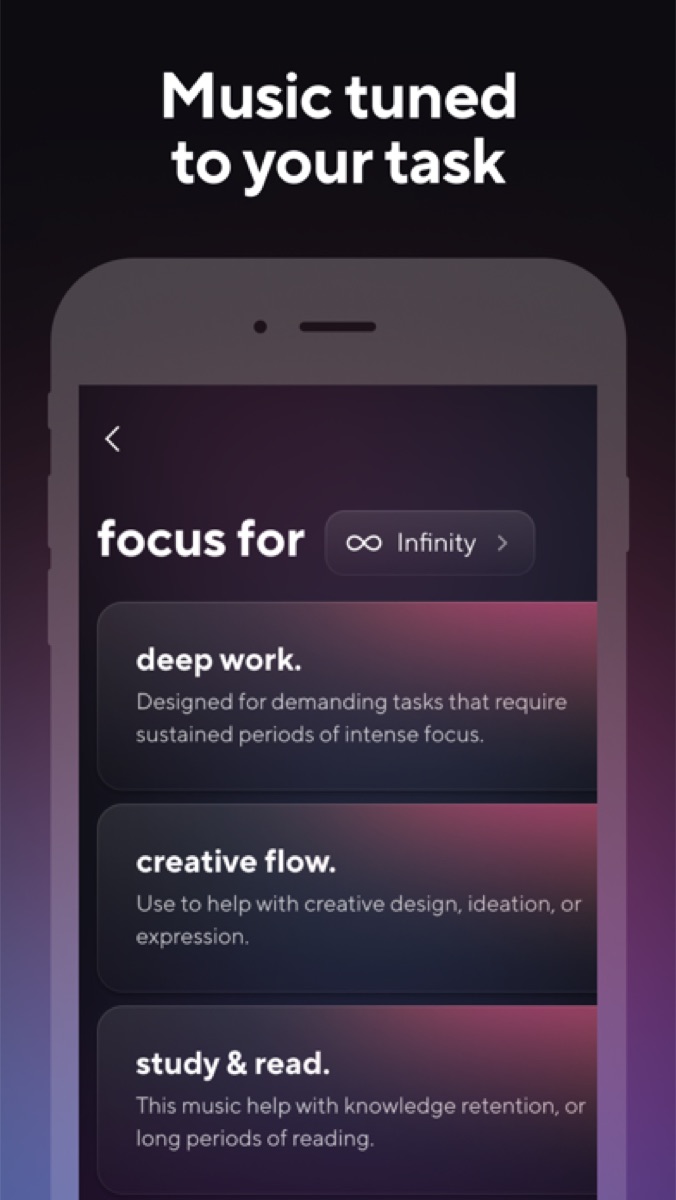
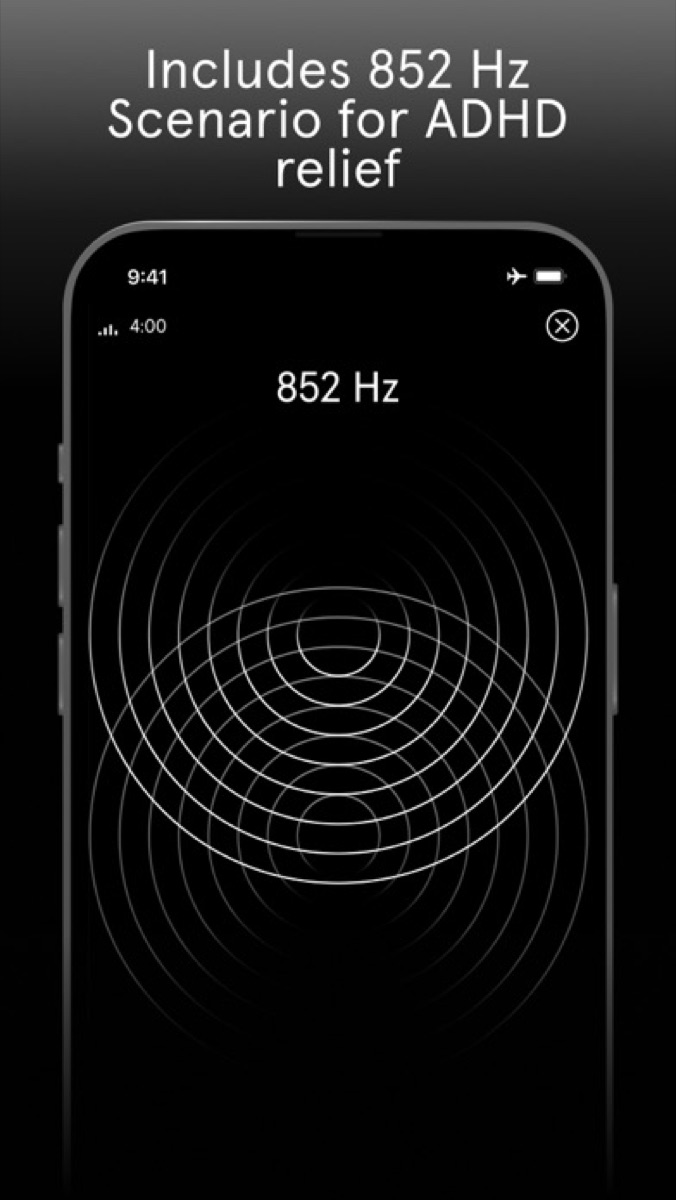
Brain.fm sells "functional music" made to support focus, relaxation and sleep, and it has a section for people with ADHD. If flat noise gets boring, it's a more varied option. The company says its approach is grounded in neuroscience, so treat that as a claim to test, not a promise.
-
Brain.fm
Brain.fm
Functional music sessions tuned for focus—press play instead of building the perfect playlist.
Brain.fm
Brain.fm
Functional music sessions tuned for focus—press play instead of building the perfect playlist.
Endel
Endel generates soundscapes that adapt to you in real time, using inputs like heart rate and light when your devices provide them. If you hate looping tracks, this is the one to try first.
-

Endel
Endel World GmbH
Soundscapes that shift with time of day and heart rate on Apple Watch—less same-loop fatigue.
Endel
Endel World GmbH
Soundscapes that shift with time of day and heart rate on Apple Watch—less same-loop fatigue.
Loop Quiet 2
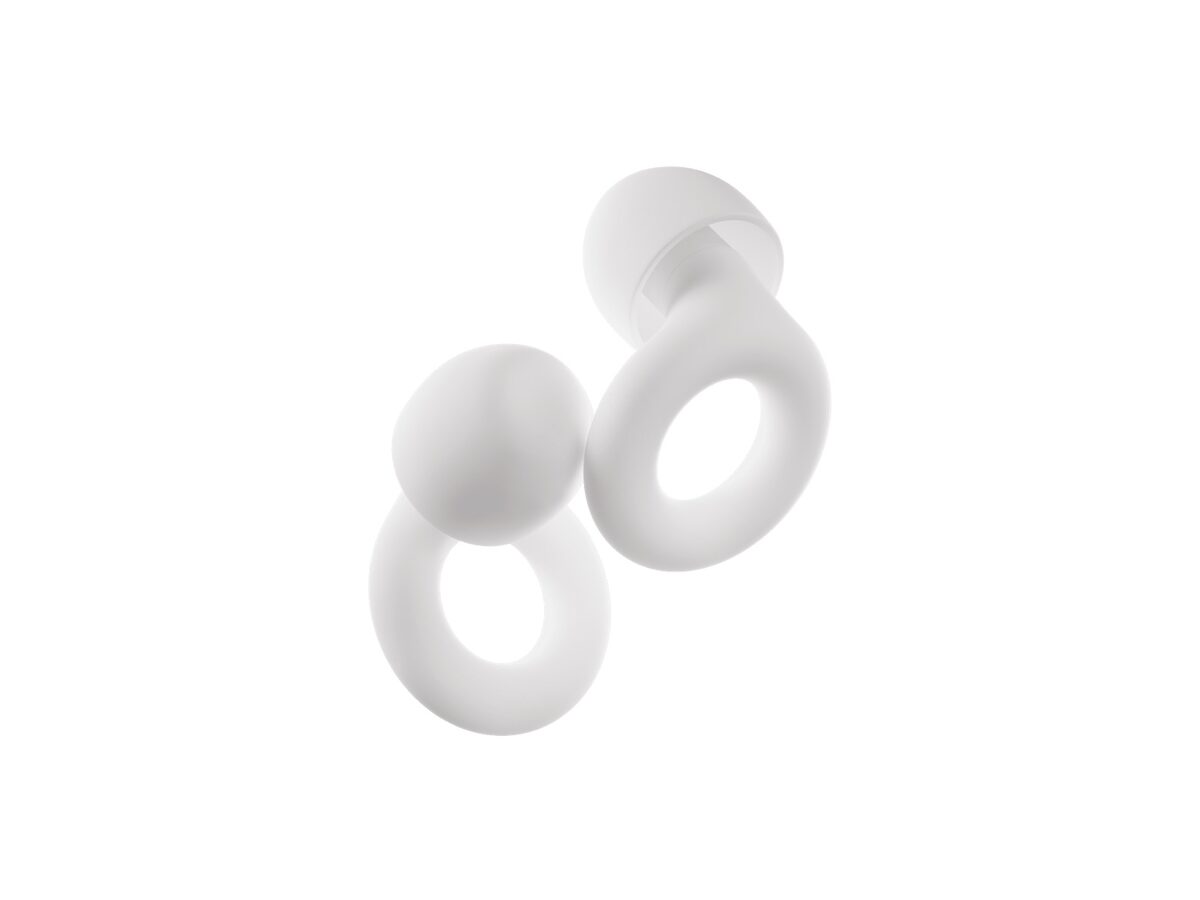
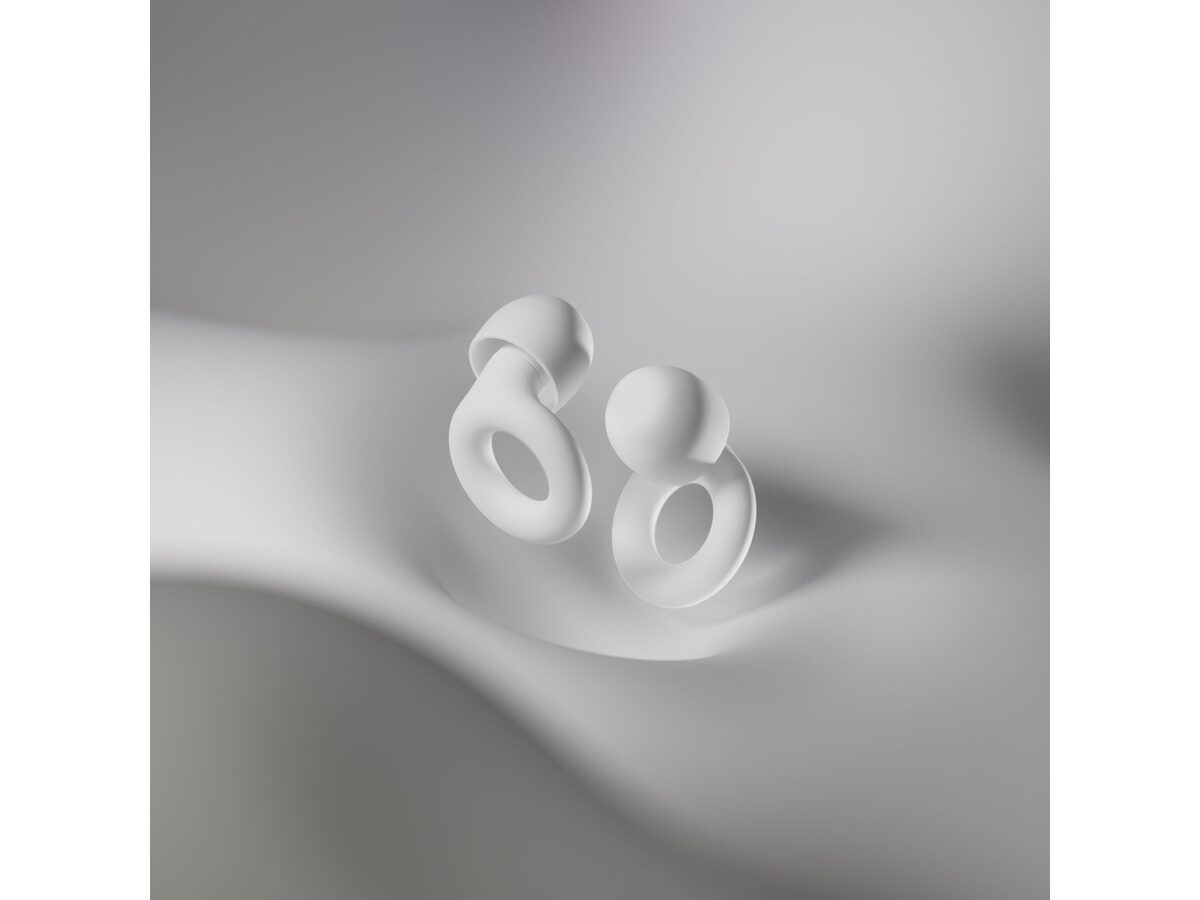
Sometimes you need less input, not more. Loop Quiet 2 are soft, reusable earplugs for noisy libraries, dorms and shared offices. No battery, no charging.
-
Loop Quiet 2
Loop Earplugs
Reusable plugs that take the edge off chatter—not full silence, so you stay aware of doorbells and coworkers.

Loop Quiet 2
Loop Earplugs
Reusable plugs that take the edge off chatter—not full silence, so you stay aware of doorbells and coworkers.
Sony WH-1000XM6
If you work somewhere loud, active noise cancellation is the most reliable way to keep your listening volume low. The Sony WH-1000XM6 cut low-frequency rumble like HVAC and traffic, so you can run brown or pink noise quietly instead of fighting the room.
-
Sony WH-1000XM6
Sony
Flagship over-ear ANC—drowns HVAC and traffic so one tab or book gets your ears.
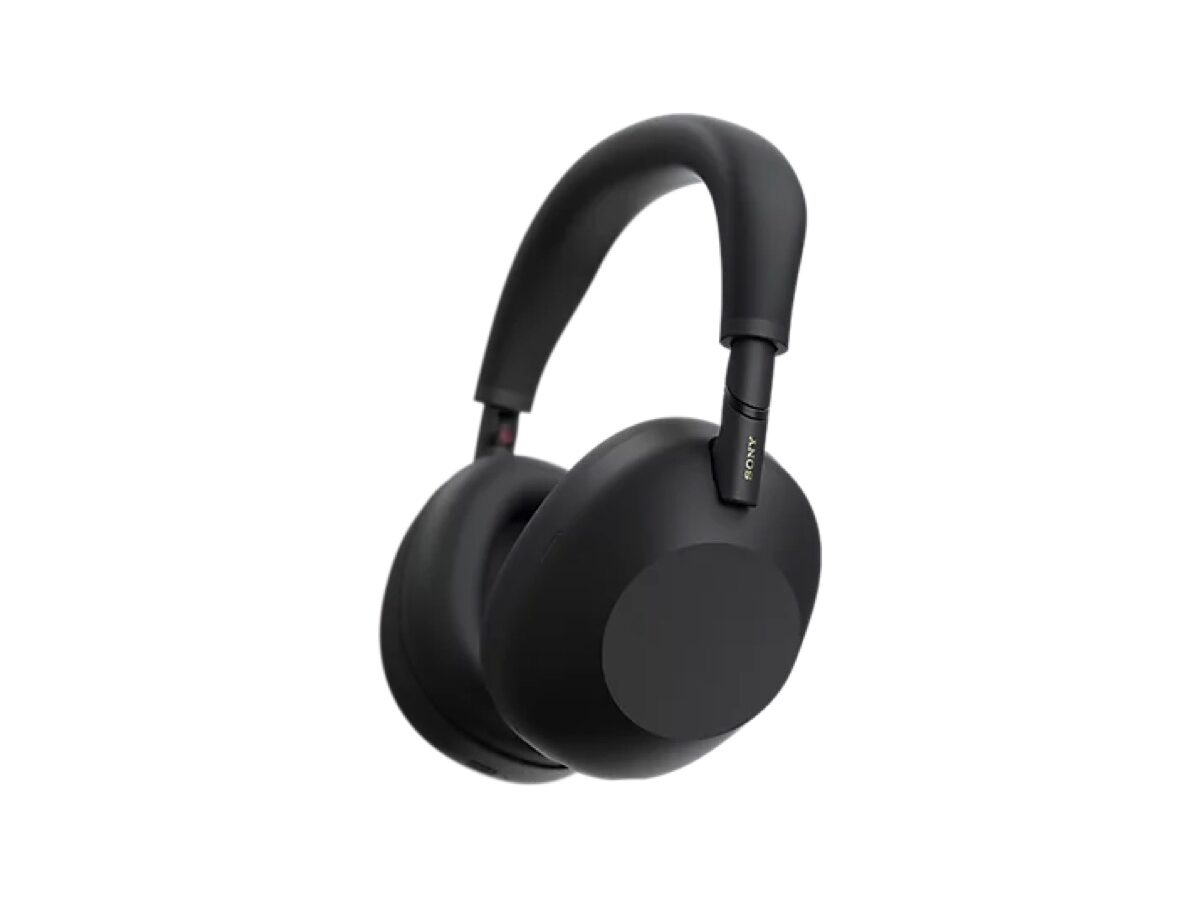
Sony WH-1000XM6
Sony
Flagship over-ear ANC—drowns HVAC and traffic so one tab or book gets your ears.
More options live in our sound recommendations. If your real problem is your phone, here's how to study without it.
FAQ
Does brown noise help you focus better than white noise?
Nobody knows. Many people find brown noise more comfortable because it has less harsh treble. But the clinical trials only tested white and pink noise, so there's no direct evidence for brown noise on task performance.
Can I listen to brown noise for eight hours while working?
Maybe, but keep it quiet. WHO's guidance sets 80 dB as the level you can listen to for up to 40 hours a week, so a full workweek of all-day listening leaves no margin. Keep the volume low, well under that, and give your ears breaks.
Is brown noise safe for children with ADHD?
Moderate-volume sound is a low-risk idea, and the 2024 meta-analysis called noise a possible low-risk option for youth with ADHD. It also said safe decibel levels still need study. WHO advises keeping children's device volume under 60 percent of maximum, with breaks. Check with your child's clinician if you have concerns.
What is the difference between pink noise and brown noise?
Pink noise drops 3 decibels per octave and sounds like steady rain. Brown noise drops 6 decibels per octave, so it's deeper and rumblier, closer to a waterfall or an airplane cabin. Only pink and white have been studied for ADHD.
Sources
- Systematic Review and Meta-Analysis: Do White Noise or Pink Noise Help With Task Performance in Youth With Attention-Deficit/Hyperactivity Disorder or With Elevated Attention Problems? (opens in a new tab) – Journal of the American Academy of Child & Adolescent Psychiatry, 2024
- Listen to the noise: noise is beneficial for cognitive performance in ADHD (opens in a new tab) – Journal of Child Psychology and Psychiatry, 2007
- Positive effects of noise on cognitive performance: Explaining the Moderate Brain Arousal model (opens in a new tab) – International Commission on Biological Effects of Noise, 2008
- Deafness and hearing loss: Safe listening (opens in a new tab) – World Health Organization
- Music to Focus Better - Brain.fm (opens in a new tab) – Brain.fm, 2026
- Endel - Focus, Relax and Sleep (opens in a new tab) – Endel, 2026
This guide is general information, not medical advice. If focus problems are getting in the way of work, school, or relationships, talk with a doctor or licensed clinician.